

There are places you visit.
And then there are places you choose to belong to.
Goa today is no longer just a holiday destination. It is evolving into a lifestyle capital, an investment hub, and a second-home destination for a new generation of Indians and global citizens.
But behind this transformation lies a powerful, often underestimated force:
Connectivity.
Because in today’s world, accessibility is not just convenience—it is value creation.
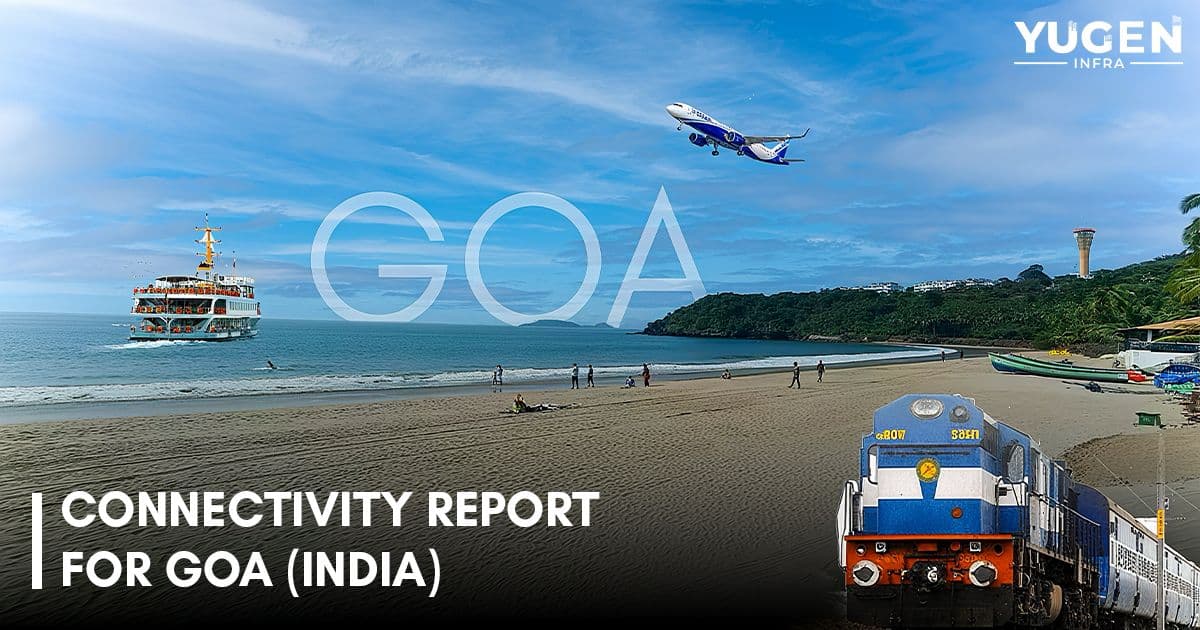
✈️ Air Connectivity: Bringing Goa Closer Than Ever
Goa is among the few destinations in India with the advantage of two operational airports, creating a rare dual-engine connectivity ecosystem.
The legacy Dabolim Airport in South Goa continues to serve high volumes of domestic traffic, while the newly developed Manohar International Airport at Mopa in North Goa is designed for the future—scalable, modern, and globally aligned.
Together, these airports handle hundreds of flight movements daily, connecting Goa to more than twenty Indian cities including Mumbai, Delhi, Bangalore, Hyderabad, Pune, and Chennai. International routes link Goa to destinations across the Middle East and beyond, including Dubai, Doha, and Muscat.
What truly stands out is the frequency. The Mumbai–Goa route alone operates like an air shuttle, with flights almost every hour. A journey that once felt like a trip is now closer to a commute.
Goa is no longer far. It is accessible, frequent, and seamlessly integrated into modern life.
🚗 Road Connectivity: Where the Journey Becomes Part of the Lifestyle
Driving to Goa has always been iconic—but today, it is also increasingly efficient.
The state is connected through major highways that link it to Mumbai, Pune, Bangalore, and Hyderabad. The coastal NH66 route offers a scenic drive through the Konkan belt, while the NH48 corridor provides a faster, smoother alternative for those prioritizing speed.
Luxury buses, improved road conditions, and increasing highway upgrades have made Goa a viable weekend driving destination, especially for western India.
For many, this is no longer just a vacation route—it is a lifestyle movement, where city life transitions into coastal calm over a single drive.
🚆 Rail Connectivity: The Backbone of Accessibility
The Konkan Railway remains one of India’s most remarkable infrastructure achievements.
Connecting Goa to major cities across the country, this route is not just efficient—it is breathtaking. Passing through tunnels carved into mountains and bridges spanning rivers, it offers a journey that is as memorable as the destination itself.
From Mumbai to Goa in under half a day, or from Delhi and beyond through long-distance express routes, rail connectivity ensures that Goa remains accessible across income segments and demographics.
This is important. Because true growth is not built only on luxury—it is built on scale and inclusivity.
🚢 Sea Connectivity: The Next Chapter in Coastal Travel
Goa’s story is now expanding into the sea.
With proposed Ro-Pax ferry services between Mumbai and Goa, the future of travel is being reimagined. Imagine boarding a ferry with your car, cruising along the Konkan coast, and arriving in Goa within hours—without the fatigue of long drives.
This is more than infrastructure.
It is an experience.
And as these routes evolve, Goa will become part of a larger coastal economic and tourism corridor, connecting multiple cities along India’s western edge.
🌍 Beyond Connectivity: The Rise of a Lifestyle Destination
Connectivity does not just bring people to a place.
It transforms the place itself.
Goa today is witnessing a shift:
From tourism to ownership
From short stays to long-term living
From occasional visits to lifestyle integration
Professionals are working remotely from Goa. Families are investing in second homes. NRIs are returning to build roots.
And all of this is possible because Goa is no longer isolated—it is deeply connected.
🚀 The MOPA Effect: Where the Future of Goa is Being Written
If Goa is evolving, the epicenter of that evolution is North Goa.
And at the heart of it lies MOPA.
The Manohar International Airport at Mopa is not just an infrastructure project—it is a catalyst for transformation.
Unlike Dabolim, which operates within constraints, MOPA is built with a vision for expansion. It is strategically located closer to North Goa’s most vibrant and premium regions—Ashwem, Mandrem, Morjim—areas already known for their global appeal.
But more importantly, MOPA is triggering a ripple effect:
New road networks and infrastructure
Increased hospitality and tourism investments
Rising demand for premium real estate
Expansion of North Goa as a lifestyle and investment zone
This is not a gradual shift. It is a directional change.
The center of gravity in Goa is moving north.
And MOPA is leading that movement.